All About Alpacas: Huacaya and Suri
Alpacas (Vicugna pacos) are domesticated mammals of the camelid family originating from the high Andean plateaus in South America (territories of modern Peru, Bolivia, and Chile). For thousands of years, they were revered by the indigenous Aymara and Incas as a source of priceless, luxurious fiber called the "gold of the Incas". At the Ajmaraya Farm in Dębowiec, we proudly breed both alpaca breeds: Huacaya and Suri.
Huacaya or Suri? How do they differ?
Alpacas are divided into two distinct breeds with completely different fleece structures and appearances.
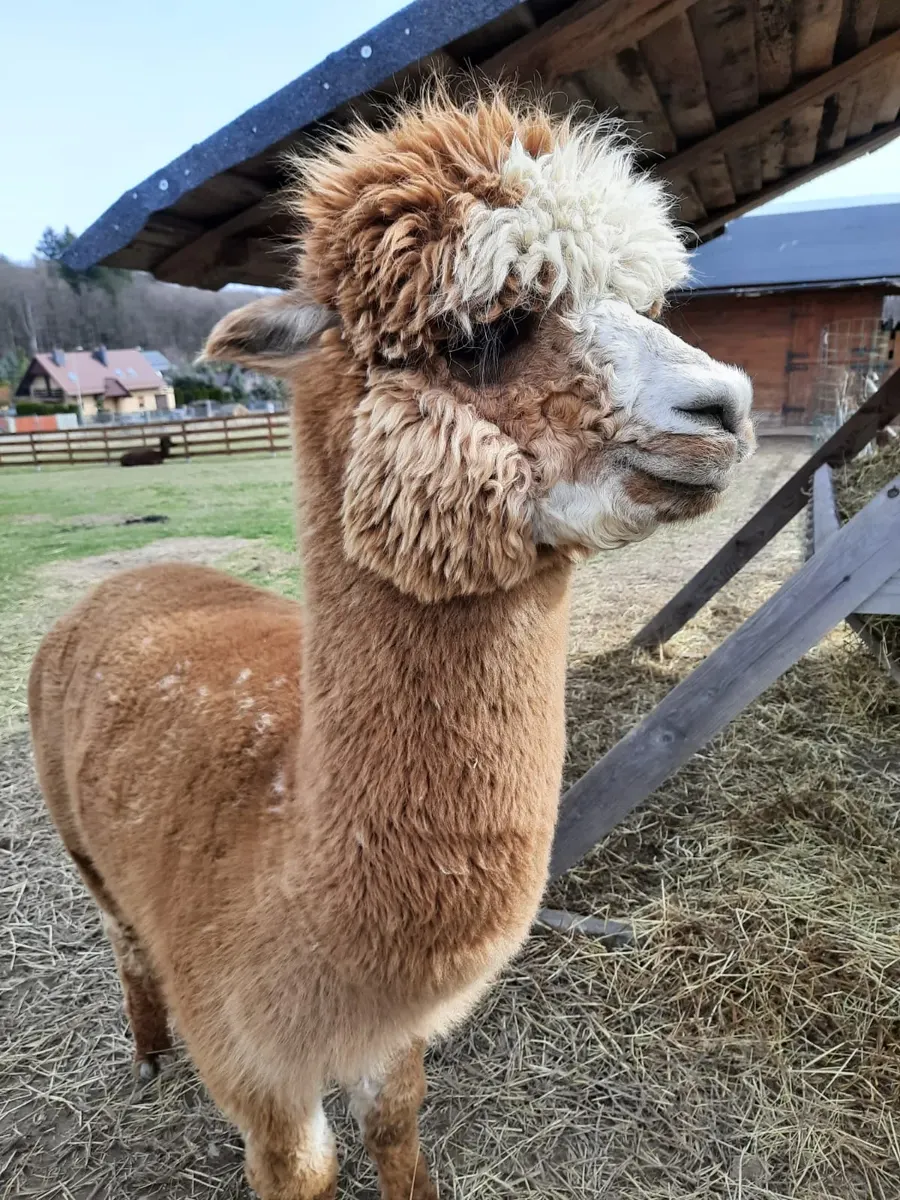 Huacaya Breed (~90% of population)
Huacaya Alpaca
Fluffy, springy fleece like a teddy bear
- • Fiber structure: The fleece grows perpendicularly to the skin, featuring pronounced crimp and high density.
- • Appearance: Fluffy silhouette resembling a lamb or living mascot, with rounded shapes.
- • Durability: Copes exceptionally well in varied weather conditions, thick fleece protects against cold and rain.
- • In our herd: We have 25 Huacaya alpacas of diverse colors.
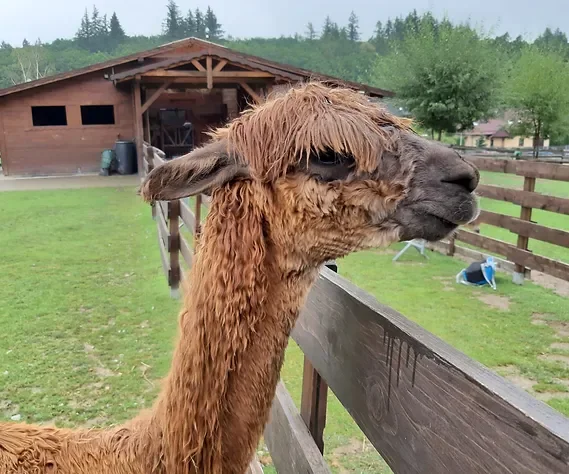 Aristocratic Suri Breed (~10% of population)
Suri Alpaca
Silky, lustrous locks and ringlets falling along the body
- • Fiber structure: The fiber has no crimp; it forms long, lustrous locks (dreadlocks) hanging freely along the body.
- • Unique shine: Suri fleece has an extraordinary, natural silky luster unmatched by other animals.
- • Rarity: Represents merely about 10% of the global alpaca population – a true jewel in any stud.
- • In our herd: Breeding with pride 13 Suri alpacas of distinguished pedigree.
Extraordinary Features of Alpaca Fiber
Why is alpaca wool considered one of the world's most luxurious natural fibers?
100% Hypoallergenic
Contains no lanolin (animal wax). Does not trap dust mites or dust, and is completely safe for allergy sufferers and children.
Thermoregulation
The fibers possess microscopic air pockets, keeping you wonderfully warm in the cold and preventing overheating in heat.
Lightweight and Durable
Several times stronger and warmer than sheep's wool. It does not wrinkle, is extremely resistant to wear, and does not 'itch'.
22 Natural Colors
Alpacas come in 22 natural shades: from snow white, through beiges, warm browns, greys, to deep black.
Alpaca Breeding, Nutrition, and Care
How do we care for the health, condition, and well-being of our herd in Dębowiec?
Nutrition & Diet
The foundation of alpaca nutrition is pasture grass in the summer season and high-quality hay available year-round. We supplement their diet with specialized feeds and minerals (zinc, selenium, ADE vitamins) and clean water. Crunchy carrots are their favorite, safe treat.
Veterinary Care
Our herd is under continuous veterinary supervision. We perform regular deworming with fecal examination, annual vaccinations, dental checks, and regular nail trimming. All animals are microchipped and registered with ARiMR.
Shearing & Animal Welfare
Shearing takes place once a year in late May and early June to relieve the animals before summer heatwaves. Alpacas are remarkably social herd animals – they must never live alone. We provide them with spacious pastures, secure shelters shielding against wind and rain, and daily human contact.
Do you want to buy an alpaca or start your own farm?
See our current offers of registered breeding alpacas with pedigree, or contact us for breeding advice.